
Differences Explained
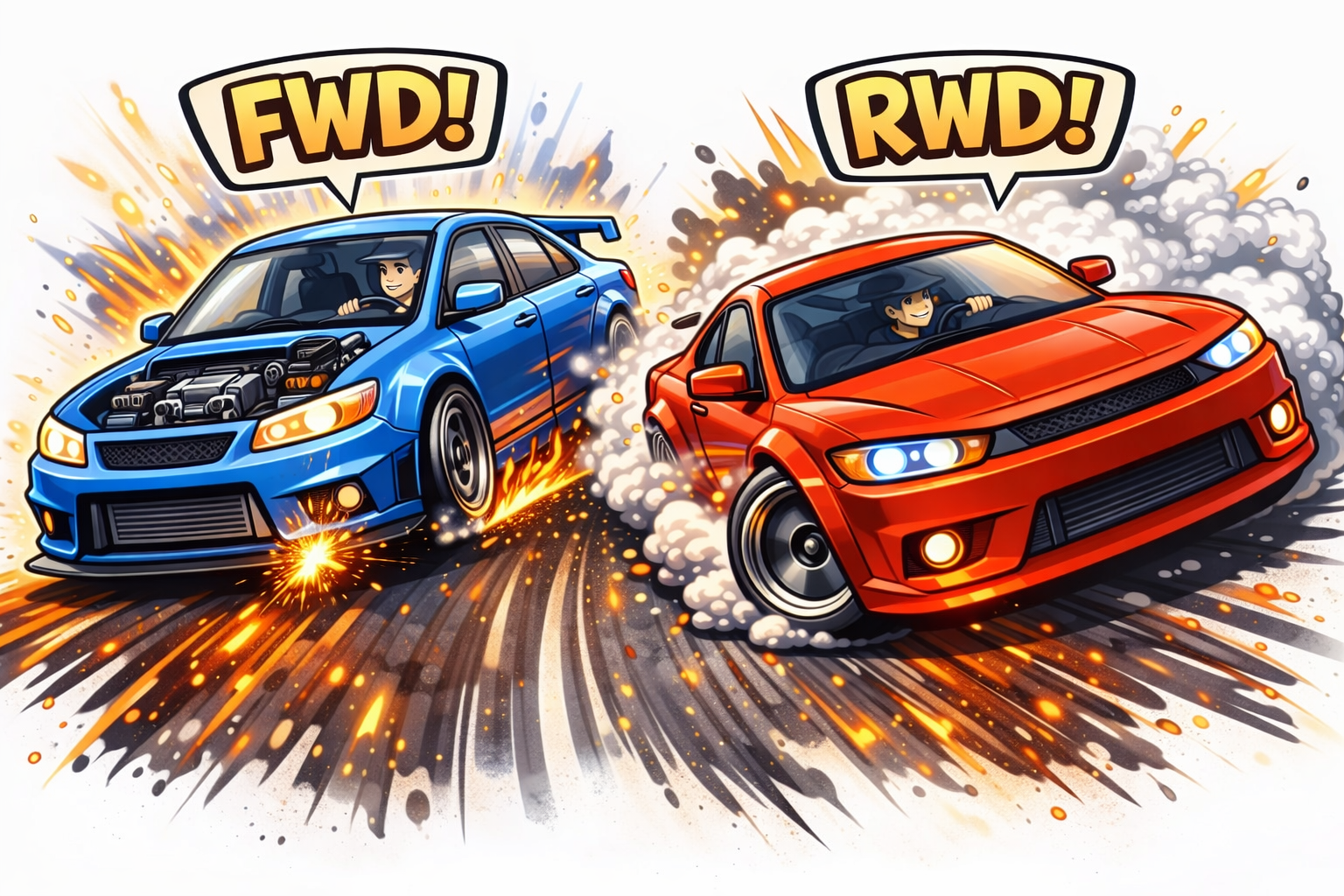
When choosing a car, one of the most important technical differences is the drivetrain layout—specifically whether the car uses Front-Wheel Drive (FWD) or Rear-Wheel Drive (RWD). Each system works differently and is designed for specific driving needs, performance levels, and vehicle types.
How Front-Wheel Drive (FWD) Works
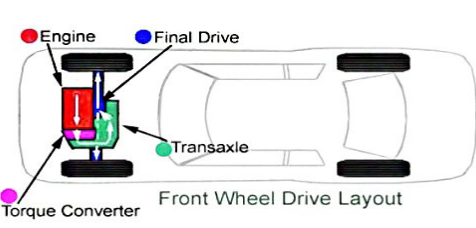
In a Front-Wheel Drive car, the engine sends power directly to the front wheels. These wheels are responsible for both steering and propulsion.
The engine, transmission, and differential are usually combined into a single compact unit called a transaxle, which helps save space and reduce weight.
Common vehicle types using FWD:
- Economy and compact cars
- Family sedans
- Hatchbacks
- Many crossover SUVs
Examples: Toyota Corolla, Honda Civic, Hyundai Elantra
How Rear-Wheel Drive (RWD) Works
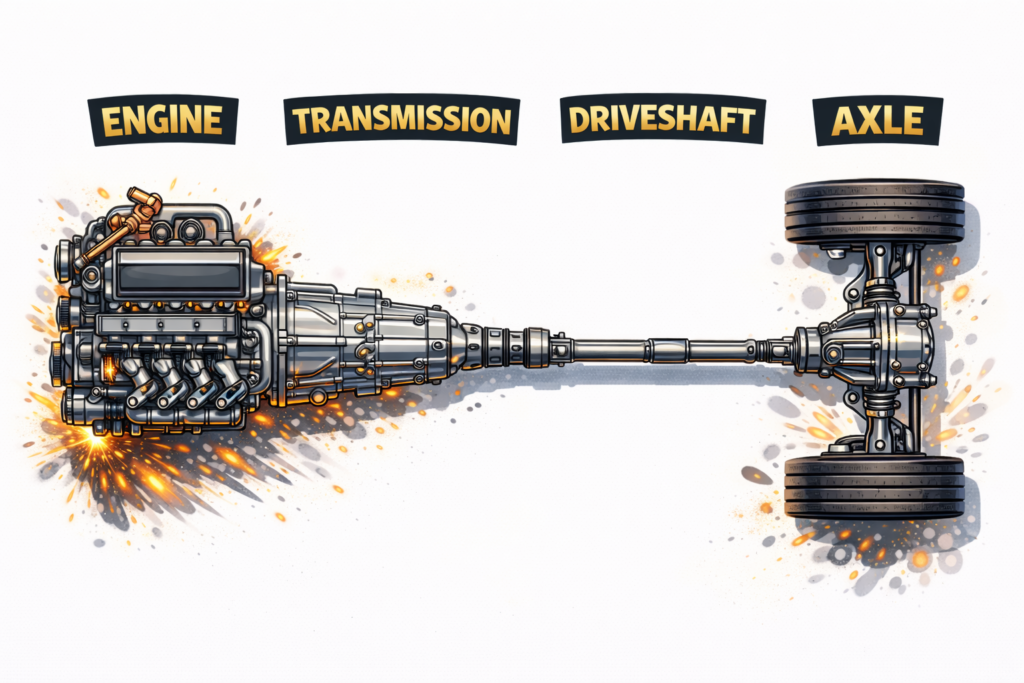
In a Rear-Wheel Drive setup, the engine sends power to the rear wheels through a driveshaft. The front wheels handle steering only, while the rear wheels handle acceleration.
This separation improves balance and handling, especially under high power or heavy loads.
Common vehicle types using RWD:
- Sports cars
- Muscle cars
- Luxury sedans
- Pickup trucks and body-on-frame SUVs
Examples: BMW 3 Series, Ford Mustang, Toyota Land Cruiser
Key Differences Between FWD and RWD
- FWD prioritizes efficiency, simplicity, and daily comfort
- RWD focuses on performance, durability, and better weight distribution
Pros and Cons Comparison Table
| Feature | Front-Wheel Drive (FWD) | Rear-Wheel Drive (RWD) |
|---|---|---|
| Power Delivery | Front wheels | Rear wheels |
| Vehicle Balance | Front-heavy | More balanced |
| Handling | Predictable, safe | More dynamic, sporty |
| Acceleration | Limited under high power | Better traction during hard acceleration |
| Fuel Efficiency | Better | Slightly lower |
| Manufacturing Cost | Lower | Higher |
| Maintenance | Cheaper and simpler | More components, higher cost |
| Driving in Snow/Rain | Better traction | Can lose traction more easily |
| Performance Driving | Limited | Excellent |
| Towing Capability | Limited | Better for towing |