

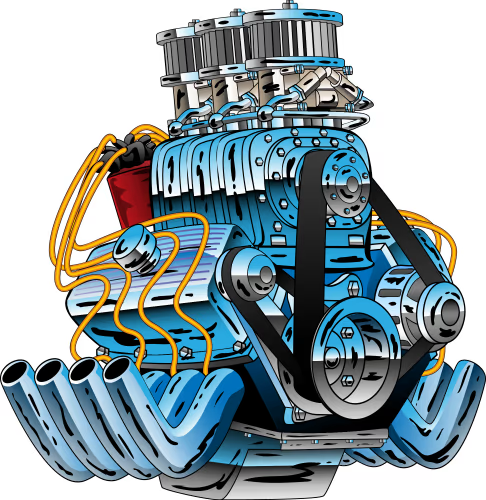
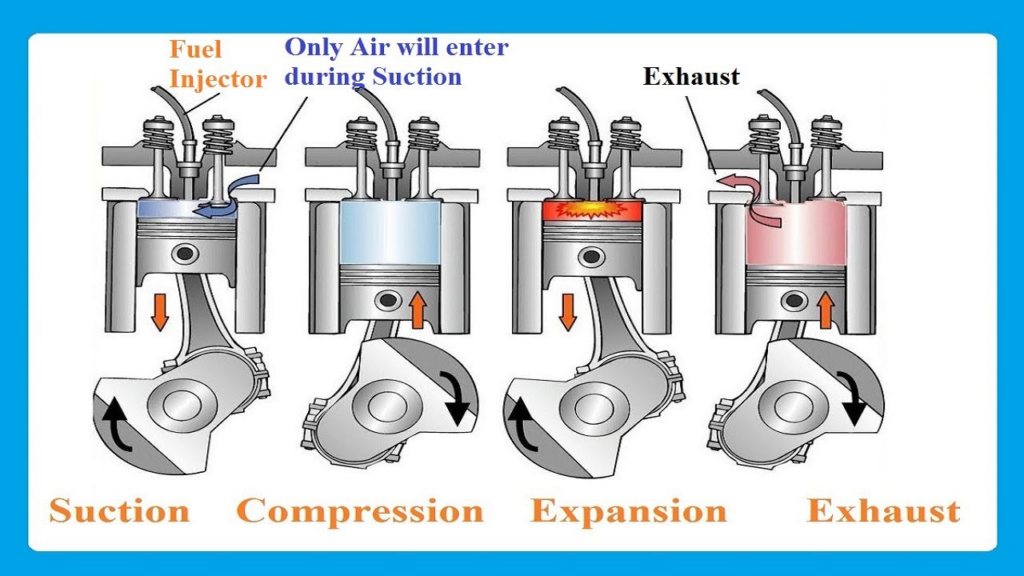
A four-stroke engine works by using four piston movements—intake, compression, power, and exhaust—to convert fuel into mechanical energy. During the intake stroke, the piston moves downward while the intake valve opens, drawing an air-fuel mixture into the cylinder. In the compression stroke, the piston moves upward with both valves closed, compressing the mixture to improve combustion efficiency. The power stroke occurs when the spark plug ignites the compressed air-fuel mixture, creating an explosion that pushes the piston downward and turns the crankshaft to produce power. Finally, in the exhaust stroke, the exhaust valve opens and the piston moves upward, expelling burned gases from the cylinder, completing the four-stroke engine cycle and preparing it for the next combustion sequence.
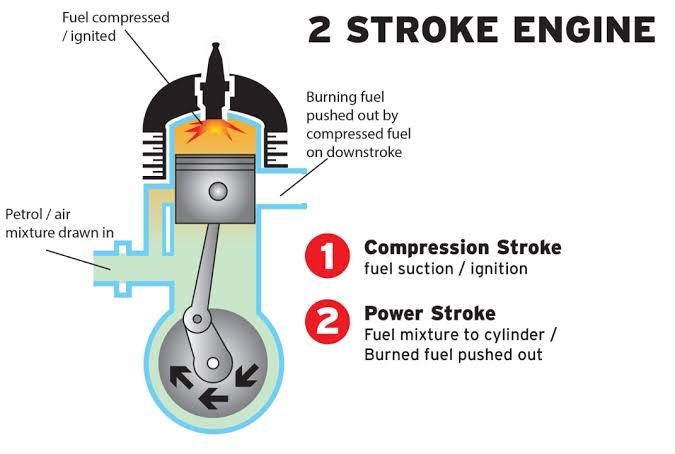
A two-stroke engine works by completing a full power cycle in just two piston movements—one upward stroke and one downward stroke—making it simpler and lighter than a four-stroke engine. During the compression stroke, the piston moves upward, compressing the air-fuel mixture in the combustion chamber while simultaneously drawing a fresh mixture into the crankcase. When the piston reaches the top, the spark plug ignites the compressed mixture, starting the power stroke. As combustion forces the piston downward, it turns the crankshaft and uncovers the exhaust and transfer ports, allowing burnt gases to exit while a new air-fuel mixture enters the cylinder. This design enables a two-stroke engine to produce power every crankshaft revolution, resulting in high power-to-weight performance.
| Feature | Two-Stroke Engine | Four-Stroke Engine |
|---|---|---|
| Power Cycle | Produces power every crankshaft revolution | Produces power every two crankshaft revolutions |
| Design Complexity | Simple design with fewer moving parts | More complex with valves and camshaft |
| Weight | Lightweight and compact | Heavier due to additional components |
| Power-to-Weight Ratio | High power output for its size | Lower compared to two-stroke engines |
| Fuel Efficiency | Lower fuel efficiency | Higher fuel efficiency |
| Emissions | High emissions due to fuel loss | Lower emissions, more eco-friendly |
| Engine Lifespan | Shorter lifespan | Longer engine life |
| Maintenance | Easier and cheaper to maintain | More expensive maintenance |
| Noise & Vibration | Louder and more vibration | Quieter and smoother operation |
| Lubrication | Oil mixed with fuel | Separate lubrication system |
| Common Applications | Motorcycles, chainsaws, small engines | Cars, trucks, modern motorcycles |
loved it